
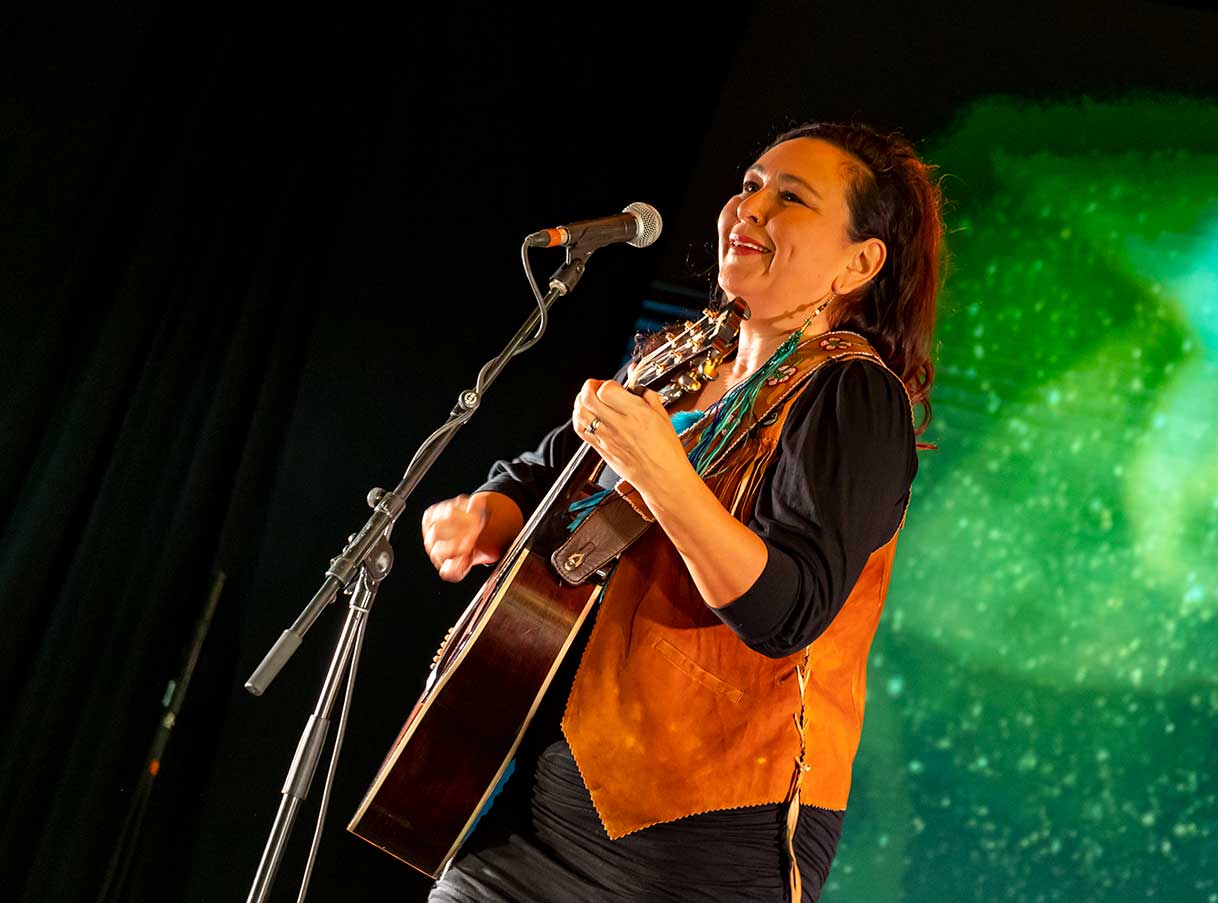
Every June, Canadians across the country come together to honour the rich cultures, histories, and contributions of First Nations, Inuit, and Métis peoples during National Indigenous History Month. This time provides an opportunity not only for reflection and learning but also for celebration — and music is one of the most powerful ways to do both.
Indigenous musicians in Canada have long used their voices and instruments to express identity, resistance, hope, and joy. Their music reflects a range of styles — from traditional drumming and throat singing to hip hop, folk, country, and indie rock — offering something for every listener. Whether you’re discovering Indigenous artists for the first time or deepening your appreciation, these musicians provide a compelling soundtrack to honour Indigenous History Month.
Here are some exceptional Indigenous musicians to listen to and learn from:
1. Logan Staats (Mohawk)
Hailing from Six Nations of the Grand River in Ontario, Logan Staats is a powerful voice in contemporary Indigenous music. With a blend of folk, soul, and rock, Staats’s music is raw and deeply emotional. His breakout came when he won the inaugural season of The Launch in 2018, but his work is grounded in much more than commercial success. Songs like “The Lucky Ones” and “Deadman” speak to survival, love, and the complex journey of reclamation. Through each lyric, Staats honours his roots and shares his truth with heartfelt intensity.
2. Tanya Tagaq (Inuk)
Tanya Tagaq is known for her intense, avant-garde style of Inuit throat singing that blends with electronic, classical, and punk influences. Her performances are emotional, raw, and entirely unforgettable. Albums like Animism and Retribution tackle colonialism, climate change, and gender violence. Tagaq’s music is not just to be heard — it’s to be felt, with every breath and cry echoing the power of resistance and reclamation.
3. William Prince (Peguis First Nation)
Hailing from Manitoba, William Prince is a master storyteller whose deep, velvety voice lends gravitas to themes of love, spirituality, and family. Rooted in folk and country traditions, his music bridges the personal and the universal. Albums like Earthly Days and Reliever have earned him critical acclaim and multiple awards, including a Juno for Contemporary Roots Album of the Year.
4. Snotty Nose Rez Kids (Haisla Nation)
This dynamic hip hop duo from Kitamaat Village, British Columbia, brings an unapologetically Indigenous perspective to the genre. Infusing humour, political commentary, and cultural pride into tracks like “Boujee Natives” and “Skoden,” Snotty Nose Rez Kids challenge stereotypes and elevate Indigenous voices in the mainstream music scene. Their work is fierce, energetic, and undeniably relevant.
5. Leela Gilday (Dene)
Leela Gilday, from the Northwest Territories, creates music that is both soul-stirring and deeply rooted in her Dene heritage. Singing in both English and her Indigenous language, Gilday weaves stories of land, community, and healing through rich vocals and contemporary melodies. Her Juno-winning album North Star Calling explores identity and resilience with grace and power.
6. Jeremy Dutcher (Wolastoqiyik Nation)
Classically trained tenor and musicologist Jeremy Dutcher blends operatic vocals with archival recordings of his Wolastoq ancestors to create a sound that is both historical and radically new. His Polaris Prize–winning debut album, Wolastoqiyik Lintuwakonawa, is a moving reclamation of language and culture. Dutcher’s work serves as a reminder that Indigenous languages are living, breathing forces of expression.
7. iskwē (Cree/Métis)
With a name that means “woman” in Cree, iskwē combines electronic, pop, and alternative sounds with vivid visuals and socially conscious lyrics. Her music tackles themes such as the missing and murdered Indigenous women and girls crisis, and the importance of identity and cultural survival. Her album acākosīk showcases her unique style — emotive, defiant, and luminous.
8. Aysanabee (Oji-Cree)
A rising star on the Canadian music scene, Aysanabee is a multi-instrumentalist whose music weaves stories of his family and heritage. Signed to Ishkōdé Records, co-founded by ShoShona Kish (of Digging Roots), Aysanabee’s blend of indie rock and soul with spoken word offers a fresh and deeply personal take on Indigenous experience.
Why Listening Matters
Supporting Indigenous musicians is more than just enjoying great music — it’s a way of acknowledging the living cultures, languages, and stories that have existed on this land for millennia. Through their art, these artists address the complexities of colonial history, celebrate identity, and envision better futures. Their work invites us all to listen deeply and reflect honestly.
Many of these artists are independent, and your support through streaming, purchasing their music, attending live shows, or sharing their work can have a real impact. Consider also tuning in to Indigenous-led radio stations like CBC’s Reclaimed, or exploring Indigenous music festivals such as the International Indigenous Music Summit or the Indigenous Music Awards.
Closing Thoughts
This Indigenous History Month, make space to listen — not just with your ears, but with your heart. The voices of Indigenous musicians in Canada carry stories that are vibrant, vital, and visionary. Whether it’s the passionate songwriting of Logan Staats, the fierce rhymes of Snotty Nose Rez Kids, or the stirring vocals of Jeremy Dutcher, their music calls us into connection, awareness, and action.
Let their songs be part of how you celebrate this month — and carry that celebration forward every day of the year.